
Understanding the Different Types of Research Journals
Ever tried to find a place to publish your research and ended up nowhere? Don’t worry, because you are not alone in this. Most students and researchers face that same confusion: “What kind of journal should I pick?” or “What even is a research journal?”
Here is the truth that journals are like housewares for your ideas. Each one has its own style, purpose, and audience; some want scientific studies that are detailed, some like to have brief insights, and others prefer papers that look at the big picture.
Consider it like music genres. There are pop, jazz, rock, etc., all of these music have different moods. Research journals are the same. They all publish knowledge, but each in a unique way.
Professionals often help students and scholars choose the right journal through our Journal Publications Services. The goal isn’t just to publish, but it’s to publish smartly, in a place where your work gets the attention it deserves.
So, in this blog, we’ll explore all the types of journals and publications you’ll come across, from academic to open access, from conference papers to review articles. We will keep it clear, simple, and student-friendly.
By the end, you will not only learn about the types of research journals but also which one fits best for your study.
What Is a Research Journal?
Let’s make this really simple. A journal is a special database or website where people share what they’ve learned through research. It is like a public notebook that stores all the discoveries and smart ideas.
When a student or scientist completes a study, they don’t just keep it to their computer. They clearly write it down and send it to the journals. The journal proofreads it, edits it, and then publishes it so others can learn and read.
You can consider journals as group chats for researchers. It is a place where everyone shares what they have found and helps each other in growth.
Experts help students publish their work through Journal Publications Services. Many of them are surprised to learn that research isn’t just about writing papers, but it’s also about sharing them with the right people.
Here’s a simple look at how a research journal is different from other kinds of writing:
| Type | What It Does | Who Reads It |
| Blog | Shares ideas or opinions | Anyone online |
| Magazine | Tells stories or news | General readers |
| Research Journal | Shares real study findings | Students, teachers, researchers |
So if you’ve ever wondered what a journal in research is, now you know it’s just a safe place where people share real studies that help others learn something new.
Types of Journals in Research
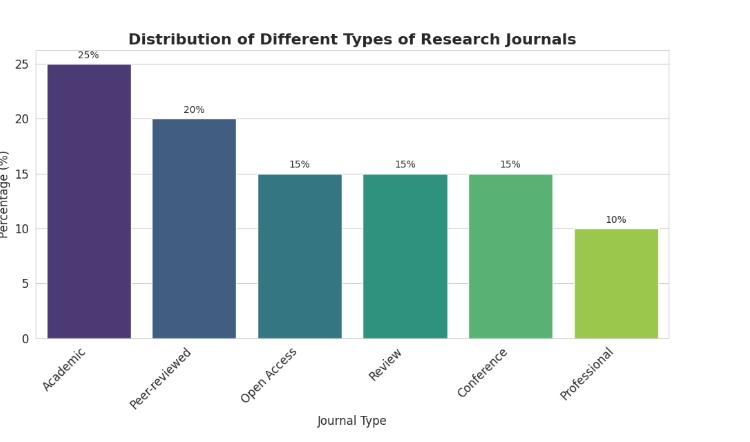
Now that we clearly understand what a research journal is, let’s talk about different types of journals in research. Not all the journals are the same. Some review old publications, some publish new ones, and some focus on a single field, such as medicine or business.
Here are some of the main types of journals that you will find in research:
| Journal Type | What It Means | Example Use |
| Academic Journals | They are for serious studies. Publishes studies from experts and universities. | A study about a new medical treatment or climate change. |
| Peer-Reviewed Journals | Experts check your work before publishing to ensure it is correct and useful. | Most trusted by students and professors. |
| Open Access Journals | Anyone can read them online for free. Great for sharing your work widely. | Perfect for students who want more readers. |
| Professional or Trade Journals | Focused on one job field or profession. | For engineers, teachers, or business professionals. |
| Review Journals | Instead of showing new results, they summarize what’s already known. | Good for beginners learning about a topic. |
| Conference Proceedings | Research presented at academic events. | For short papers or early research ideas. |
Each one plays a different role.
Expert Research Consultancy guides students on which type best fits their studies. For instance, if it’s your first paper, an open-access journal may look easy. However, if you are doing detailed work, peer review adds credibility.
The key is knowing your goal. Are you trying to reach more readers, or are you building a strong research profile? Your choice of journal depends on that.
How to Choose the Right Journal for Your Research
Picking the right journal for your research can feel a bit tricky. There are just so many out there. Some sound fancy, some charge a huge fee, and some promise fast results. But actually, it all comes down to what you want from your work.
Before you decide, take a moment to think about this: who do you want to read your research?
- Do you want it to reach many people or just experts in your field?
- Are you after recognition, or are you just starting and looking for experience?
Once you know your thing, the rest becomes much easier. If you want your research to be set up online fluently, look for open-access journals. They let anyone read your work without paying. But if you’re more focused on character, then peer-reviewed journals are a great choice because they’re checked and approved by other experts.
And if it’s your first time publishing, you might want to start small, like with a conference paper. It’s a great way to share your ideas, get feedback, and build confidence.
- Here are some simple pointers that you can keep in mind:
| What You Want | Where to Publish | Why It Helps |
| Huge collections | Open-access journal | Anyone can read it online |
| More credibility | Peer-reviewed journal | Experts review it first |
| Quick feedback | Conference papers | Great for early-stage work |
| Broader knowledge | Review journals | Helps you learn from others |
Scholars are always informed that picking the right journal is like choosing where to live. It needs to fit you and your work. The right choice can make your research shine.
Don’t stress if you are not sure where to begin. Professional help can help you find journals that match your content, budget, and guide you through the submission process, too.
Why Publishing in the Right Journal Matters
Let’s be honest, publishing a paper isn’t just about getting your name out there. It’s about sharing something that matters, something you’ve worked hard on. But where you publish that work can make all the difference.
Suppose you’ve spent months, maybe years, writing content. You eventually finish it, write it up, and share it. Now, if the journal you have picked doesn’t reach the right collection or isn’t submitted in your field, your work may not get the attention it deserves. This is why opting for the right journal is important.
When your paper is published in the right place, these elements are seen:
- People actually read it.
Your audience finds your research useful.
- You make credibility.
Being in a trusted journal makes your name stand out.
- It opens doors.
You might get invited to attend or speak at conferences.
Here is a simple table for your understanding.
| Journal Type | Impact on Your Work Visibility | Career Value |
| Peer-reviewed | High credibility | Moderate to Excellent |
| Open-access | Very high visibility | High to Great for new authors |
| Original journals | Limited but useful launch | Moderate to Good for newcomers |
Expert Thesis Writers know how the right journal can boost people’s confidence and even help them land research backing. It’s not just about getting published; it’s about being seen, valued, and remembered.
So, before you hit that “submit” button, take a few minutes to check if your journal truly fits your research choice. A little care now can save you a lot of stress later.
Understanding How Journal Publications Work
So, let’s be honest for a moment. Most people think that publishing a paper is as simple as writing, sending it, and being done. However, if you have already tried it, then you know it is not as simple as it sounds.
The procedure feels like waiting for the exam results. You write in the best way possible, you send it, and then you check your email hundreds of times in a single day. Once you have understood how this all works, it does not feel scary at all.
Here are all the steps that show how it goes:
First, you pick a journal. Sounds simple, right? But this part really matters. You need to find a journal that fits your topic. If you studied climate change, don’t send your paper to a psychology journal. The right match makes all the difference.
Next, you prepare your paper. Every journal has its own set of rules, like word count, structure, and style. Some even have strict font and spacing guidelines (yes, really). It can feel boring, but following them shows you’re serious.
Then comes the big moment when you hit submit. This is when you take a deep breath, cross your fingers, and hope for the best. The waiting part? That’s the hardest.
After that, the peer review begins. Other researchers read your paper, check your facts, and sometimes send comments. It’s not personal, but they’re just making sure your work is solid.
Don’t panic if they ask you for some changes. Revisions are normal. You fix what needs fixing and send it again.
And finally… acceptance. That moment when you open your email and see “Congratulations, your paper has been accepted.” Pure joy. All those sleepless nights suddenly make sense.
Here’s a quick way to understand it:
| Step | What’s Happening | How You’ll Feel |
| Pick a journal | Finding the right home for your paper | Hopeful |
| Prepare your paper | Following all the tiny rules | Focused (and maybe tired) |
| Submit it | Clicking that scary “Send” button | Nervous but proud |
| Peer review | Others read and comment | A mix of fear and curiosity |
| Revise and resubmit | You make it better | Accepted! |
| Your work gets published | Over the moon | ____ |
Frequently Asked Questions
1. What’s a journal in research?
A journal is basically a book or website where researchers share their studies. Think of it as a home for research papers where scientists, scholars, and academics publish their research so others can learn from them.
2. What are the main types of journal publications?
There are numerous, but the most common ones include academic journals, peer-reviewed journals, open-access journals, and trade or professional journals. Each has its own purpose. Academic and peer-reviewed sources are for serious, in-depth research. Open-access journals are easier to reach and free to read.
3. How long does it take to get published?
It can take anywhere from many weeks to several months. It depends on how long the review process is and whether changes are demanded. But when that acceptance message arrives, it’s worth the delay.
4. What if my paper gets rejected?
It happens to everyone. Don’t take it seriously. Read the publishing guidelines, edit your work, and try again. Even the best researchers have faced rejections. It’s just part of the journey.
Conclusion
Publishing your research isn’t just about adding another line to your CV. It’s about sharing something you’ve worked hard on, something that can help others learn or see the world.
Whether you’re submitting to a small publication journal or some famous academy, keep in mind that every paper tells a story, and every story deserves a place to be heard.
The process might feel slow, confusing, or even frustrating at times. But with a little patience, some expert guidance, and a lot of heart, you’ll get there.

Professional writer Melissa Kimberly has for several years been writing well researched analytical pieces for a number of academic websites and journals․ She is a professional contributor to Scope Publications, where she writes specialized and formal academic articles․ Melissa’s work includes critical analysis, creativity and adherence to the conventions of academic writing․ Her current research interests are in academic publishing, research development and editorial practices․ Her work relies on the premise that writing should be accurate, honest, and meaningful․ She explains how her work applies to researchers, scholars, and readers needing good academic writing that is accurate and meaningful․