

How Professional Editors Help Improve Your Manuscript for Publication
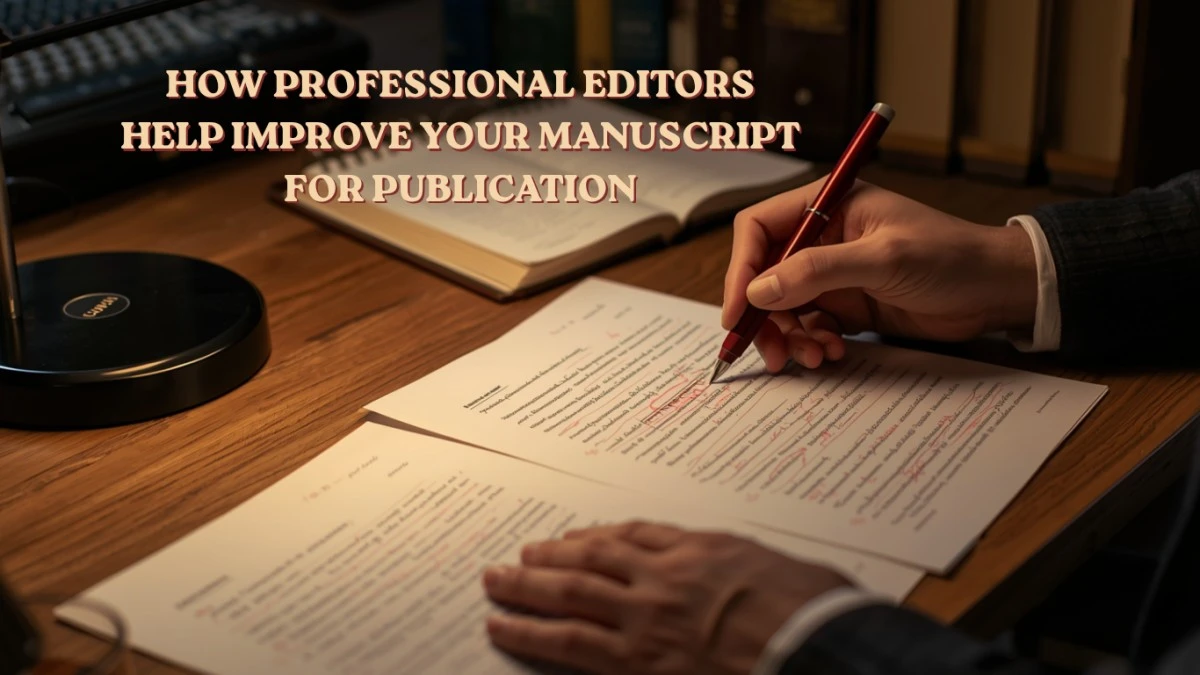
Writing a manuscript is a deeply personal and often challenging journey. Whether you’re crafting a novel, a research paper, or a non-fiction book, your work represents hours, sometimes years of effort. But completing a manuscript is only half the battle.
Turning it into a polished, publication-ready piece requires a different kind of expertise, this is where professional editors step in.
The process of professional and valuable manuscript editing transforms it into a work with greater clarity, stronger structure, a polished tone, and a stronger connection to the reader, going beyond correcting grammar errors.
Let’s examine the ways that a professional editor enhances your manuscript presentation and significantly impacts the likelihood of your getting it published successfully.
Understanding the Role of a Professional Editor
Most people believe that an editor only corrects spelling and punctuation mistakes. However, the job of a professional editor is much more than just fixing spelling and grammar errors. An Editor will serve as a critical reader, a partner in the writing process, and a quality assurance for the finished piece of writing.
They assess your work from multiple perspectives to turn it into a structured manuscript.
- Content clarity
- Structural coherence
- Language precision
- Audience engagement
Their goal is not to change your voice but to amplify it and ensure your ideas are communicated effectively and impactfully.
Types of Editing
More than just proofreading
Before diving into how editors help, it is important to understand the different levels of editing involved in refining a manuscript.
1. Developmental editing
This is the most in-depth form of manuscript editing. Developmental editors focus on the big picture elements of your manuscript:
- Plot structure for fiction
- Argument flow for academic or non-fiction work
- Character development
- Organisation and pacing
A professional editor can help the writer review their work for flaws. They may recommend changes, such as adding, deleting, or moving text, to tell a stronger story or make an argument.
2. Line editing
Line editing looks at how the writer has told their story or conveyed their message at the sentence and paragraph level. Line editors will work to improve:
- Sentence structure
- Tone consistency
- Word choice
- Flow and readability
This process helps create more emotional and intellectual impact in your writing.
3. Copy editing
Copy editors perform manuscript review and check for accuracy, technicalities, and consistencies:
- Grammar punctuation
- Spelling
- Style guidance adherence (APA, MLA, Chicago, etc.)
This is where your manuscript becomes clean and professional.
4. Fact-checking
Proofreading is the last step before publishing. It identifies areas that still need a small amount of attention, such as minor formatting issues or inconsistent errors.
Improving Clarity and Readability
A professional editor’s most significant contribution is often clarity. Writers are often too close to their manuscripts, so they often miss spots that can be confusing for the readers or might not be important.
Editors:
- Simplify complex sentences
- Eliminate redundancy
- Clarify ambiguous ideas
For example, a sentence that feels clear to you may be misinterpreted by readers. An editor ensures that your message is understandable without damaging its depth.
Strengthen Structure and Flow
Expert proofreaders and professional editors assist in structuring your content logically, and engaging as a good writing piece may still fail if it lacks proper structure.
They assess:
- Whether chapters or sections are in the right order
- If transitions between ideas are smooth
- Whether the pacing keeps readers engaged
For fiction, this might involve restructuring scenes to create suspense. In academic writing, this may mean rearranging arguments to make a stronger impression on your readers.
A well-structured manuscript maintains the reader’s attention from the beginning to the end.
Refining Your Unique Voice
Writers often fear differences in their tone and individuality. When in reality, a skilled editor does it differently. They refine and improve your voice rather than completely changing it.
Editors:
- Maintain your tone and style
- Remove inconsistencies
- Ensure your voice remains authentic throughout the manuscript
If your tone shifts unintentionally, an editor will correct it while preserving your intended personality. For example, from formal to conversational
Improving Language Precision and Impact
Clear writing is about being exact, more than just grammar. By working with a professional editor, you will be able to find the most effective words and phrases to convey your message.
A professional editor will:
- Replace weak or vague language with more powerful language.
- Remove unnecessary filler words
- Improve the emotional and persuasive impact of your message.
Clarity, precision, and impact are crucial in a highly competitive publishing market, as these characteristics will help your piece stand out from the competition.
Identifying Gaps and Weaknesses
Writers often fail to see lapses in their writing. These may consist of:
- Missing information
- Incomplete arguments
- Underdeveloped Characters
- Inconsistences
Editors examine your manuscript from the standpoint of a first-time reader to note where you could benefit from additional support.
For example:
- A research paper may lack sufficient evidence for a key claim, and you can ask for a research manuscript
- A novel may have a character arc that feels rushed or incomplete
Editors help create manuscripts that are not only error-free but also interesting.
Ensuring Consistency and Professional Standards
Consistency is crucial, especially for a manuscript for publication. Professional editors ensure uniformity in:
- Terminology
- Formatting
- Style
- Tone
Editors also ensure they adhere to specific guidelines set by journals or publishers for academic and professional writing.
This attention to detail enhances credibility and professionalism, the two critical factors in the publishing process.
Boosting Confidence and Objectivity
You might have strong emotions attached to your writing, which can make it difficult to be objective as you read through your book. Having an editor gives you a chance to have a person who can be objective with you, which can help you understand how your writing impacts the reader differently from how you feel as the author.
Their insights:
- Highlight strengths you may have overlooked
- Identify areas for improvement without personal bias
- Provide constructive suggestions for enhancement
This not only helps you improve your manuscript but also builds your confidence as a writer.
Increasing Chances of Publication
Publishing is highly competitive. Whether you’re submitting to a literary agent, a journal, or a publishing house, your manuscript needs to meet high standards.
A professionally edited manuscript will:
- Show that you are a professional
- Prevent technical mistakes from causing rejection
- Provide you with a better first impression of your writing
Editors help ensure your work meets industry expectations, giving you a significant advantage in the submission process and a publication-ready manuscript.
Saving Time and Effort in the Long Run
Ultimately, hiring an editor can save you time in the long run, even though it may feel like one more step
Without editing:
- You may face multiple rejections
- You might need major revisions later
- Publication delays due to errors
With the assistance of a professional editor, you are closer to a publishable manuscript from the very beginning, making the entire process much smoother.
A Collaborative Partnership
As a writer, you need to understand that the editing process is not a one-sided activity. Rather, it is a collaborative activity between the writer and the editor. The best result can be achieved through a collaborative partnership.
Editors:
- Respect your vision
- Offer suggestions, not impositions
- Encourage creative growth
This partnership often helps writers improve their skills, making future writing projects stronger and more refined.
This collaboration may also help you become a better writer in the future, with your future writing projects being more refined.
Frequently Asked Questions
- What does a professional editor actually do?
A professional editor goes beyond correcting grammar and spelling. They review your manuscript for clarity, structure, tone, and consistency. Depending on the level of editing, they may also suggest changes to improve flow, strengthen arguments, and enhance overall readability.
- Do I really need an editor if I’ve already proofread my work?
Yes. Self-proofreading is helpful, but it’s difficult to spot all errors in your own writing. A professional editor provides an objective perspective and catches issues you might overlook, including structural weaknesses and unclear ideas.
- What is the difference between editing and proofreading?
Editing involves improving the content, structure, and language of your manuscript, while proofreading is the final step that focuses on correcting minor errors like typos, punctuation, and formatting issues.
Wrapping Up
A manuscript is more than just a collection of words on a page. It reflects your thoughts, creativity, and work. Yet even the best writers can benefit from professional editing.
Whether it is the writing style, flow, and organisation, use of language, or consistency, professional editors can play an invaluable part in turning a good manuscript into a great one.
If you want to publish your work, it is not only beneficial but necessary to use professional editorial services for the manuscript.

Professional writer Melissa Kimberly has for several years been writing well researched analytical pieces for a number of academic websites and journals․ She is a professional contributor to Scope Publications, where she writes specialized and formal academic articles․ Melissa’s work includes critical analysis, creativity and adherence to the conventions of academic writing․ Her current research interests are in academic publishing, research development and editorial practices․ Her work relies on the premise that writing should be accurate, honest, and meaningful․ She explains how her work applies to researchers, scholars, and readers needing good academic writing that is accurate and meaningful․